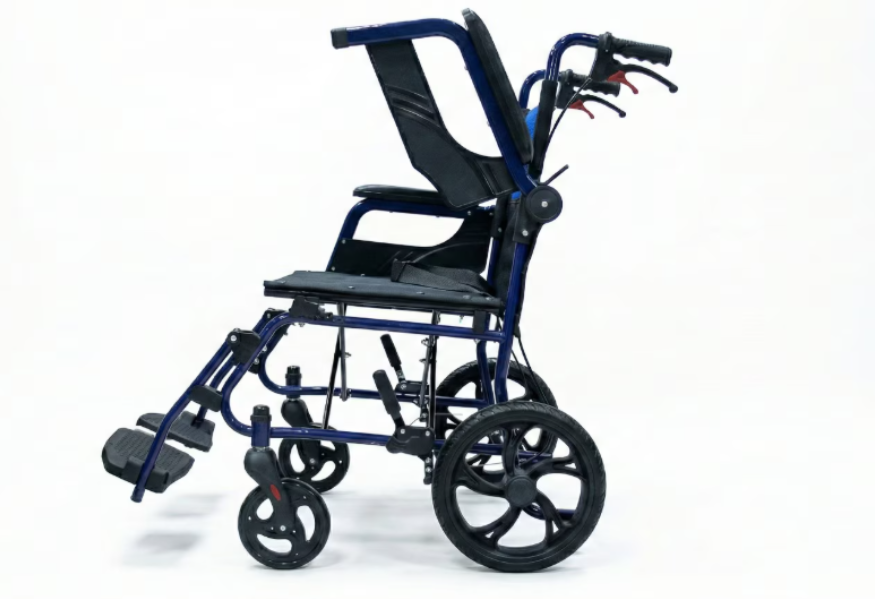
A Wheelchair for Assisted Patient Mobility is an essential patient-care device in many hospitals, clinics, rehabilitation facilities, diagnostic centres, and long-term care environments. It may be used to move patients between departments, assist people with limited mobility, or support other clinically appropriate transportation needs.
For procurement managers, wheelchair selection should focus on the intended use, user requirements, safety features, construction, maintenance, and supplier support.
Define Where the Wheelchair Will Be Used
A hospital wheelchair used primarily for patient transport may have different requirements from a wheelchair intended for longer-term individual use.
Before requesting quotations, determine the primary application.
Consider:
- Indoor patient transport
- Outpatient department use
- Diagnostic-area transfers
- Discharge requirements
- Rehabilitation use
- Other patient-specific mobility needs
A clearly defined application makes product comparison easier.
Evaluate Seat Dimensions and User Requirements
Wheelchairs are not universally sized for every user.
Seat width, seat depth, back support, footrest configuration, and overall dimensions can affect usability.
The manufacturer's stated weight capacity should also be verified.
Healthcare facilities serving patients with varied body sizes may require more than one wheelchair specification.
Inspect the Frame and Moving Components
Institutional wheelchairs can experience frequent handling.
Procurement teams should evaluate frame construction, wheel movement, push handles, footrests, arm supports, brakes, folding mechanisms where applicable, and other relevant components.
A sample unit, when available for evaluation, can help clinical and procurement teams understand how the product operates before a larger order is finalised.
Brakes Deserve Specific Attention
Wheelchair brakes or parking mechanisms are important operational components.
Staff should understand how the mechanism works and check it before patient use according to the facility's safety procedures.
Procurement evaluation should include ease of operation as well as the availability of appropriate product instructions.
Think About Cleaning and Maintenance
Hospital wheelchairs are reusable equipment and require routine cleaning and inspection.
Materials and surfaces should be considered in relation to the healthcare facility's infection-control practices and the manufacturer's cleaning recommendations.
Maintenance planning should include checks for:
- Tyre or wheel condition
- Brake function
- Loose components
- Footrest condition
- Seat and backrest condition
- Frame damage
- Folding mechanism
- Hand grips
A maintenance log can help high-use facilities identify recurring equipment issues.
Compare Suppliers on Availability and Support
A procurement manager should be able to obtain clear answers about product specifications, quantity availability, expected delivery, and repeat supply.
If replacement components or accessories are relevant to the selected model, their availability should also be discussed.
This is where supplier readiness becomes part of the purchasing decision.
V Karan Pharma supports pharmaceutical, surgical, medical, orthopedic, and patient-care product requirements in Thane. Healthcare procurement teams evaluating wheelchairs can review product configurations according to their operational and patient-care needs.
Consider Total Cost of Ownership
Initial price is easy to compare, but it does not represent the entire cost of a wheelchair.
Institutional purchasers can consider:
Purchase cost + maintenance requirements + replacement components + expected durability + operational downtime
A product that costs slightly more initially may offer better overall value if it meets the required specification and remains serviceable over an appropriate period.
Conversely, a higher price does not automatically guarantee better suitability. Specifications should drive the decision.
Create a Clear Purchase Requirement
Before approaching a supplier, prepare a concise requirement covering:
- Wheelchair type
- Quantity
- Intended application
- Seat or dimensional requirements
- Weight-capacity requirements
- Required mobility and safety features
- Delivery expectations
- Documentation needs
Clear specifications allow suppliers to provide more relevant quotations and reduce the risk of purchasing the wrong configuration.
Choose for the Healthcare Environment, Not Just the Catalogue
Hospital procurement is fundamentally different from selecting a wheelchair for occasional personal use. Equipment may be handled by multiple staff members, used repeatedly, stored between uses, cleaned frequently, and moved through busy clinical environments.
For hospitals and healthcare organisations in Thane and other parts of Maharashtra, a Wheelchair for Assisted Patient Mobility should therefore be evaluated as a complete operational asset.
When procurement teams combine clinical input with clear specifications, equipment inspection, lifecycle planning, and dependable supplier support, they can make purchasing decisions that are better aligned with everyday patient-care requirements.
Keywords