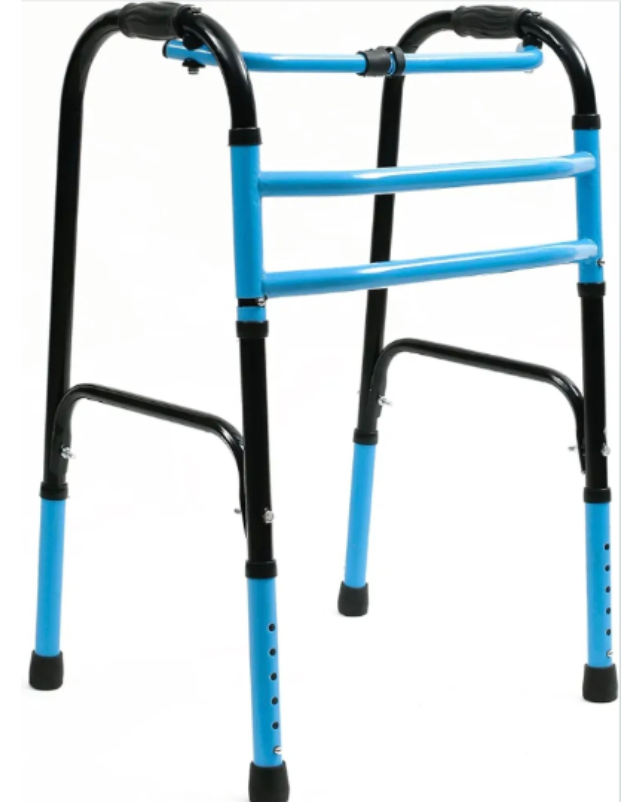
A Walker for Patient Mobility Support may be required for patients who need additional stability while walking. Hospitals, rehabilitation centres, orthopedic departments, physiotherapy facilities, and discharge-planning teams may therefore keep mobility aids available for suitable patients.
Because a walker supports body weight and movement, hospital procurement managers should verify construction and usability carefully before ordering.
Confirm the Required Walker Design
'Walker' is a broad product description.
Different models may be fixed, foldable, height-adjustable, wheeled, or designed with other specific features. The clinical department requesting the equipment should define which configuration is required.
Substituting one type for another solely because it is available can result in equipment that does not meet the intended need.
Check Frame Construction
The frame should be inspected for stability and suitable construction.
Procurement teams can review the materials used, joints, cross-members, folding mechanisms where present, and overall finish.
Equipment intended to assist mobility should not have obvious looseness, sharp edges, damaged parts, or unstable components.
Verify the Stated Weight Capacity
Never estimate weight capacity from appearance.
The manufacturer's specified capacity should be checked before procurement and communicated where necessary.
Healthcare organisations serving a varied patient population may need different mobility-aid specifications rather than assuming that one model is appropriate for every patient.
Look at Height Adjustment
Walker height can influence posture and usability.
If an adjustable model is required, check the available adjustment range and locking mechanism. Adjustments should be secure and easy for trained staff to verify before use.
Clinical teams should determine appropriate setup for individual patients.
Inspect Hand Grips and Floor Contact Points
Hand grips affect comfort and control, while the components contacting the floor contribute to stability.
Rubber tips or similar components should be secure and replaceable where applicable.
These parts can wear over time, so reusable hospital walkers should be included in routine inspection procedures.
Consider Folding and Storage
Storage is a practical issue for institutional buyers.
A foldable walker may require less space when not in use, but the folding mechanism itself should be easy to operate and secure correctly during use.
Procurement teams can calculate available storage space before ordering large quantities.
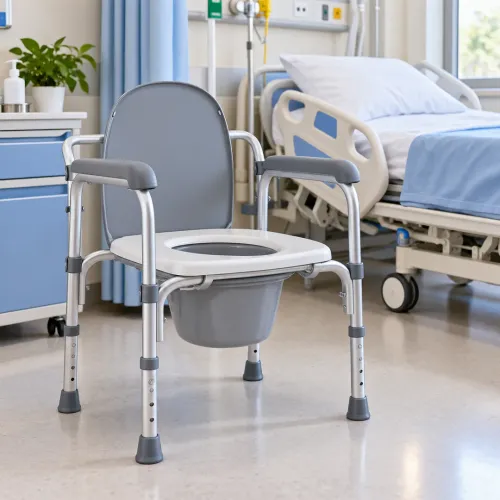
This is particularly useful for hospitals in Thane where equipment stores may already accommodate wheelchairs, commode chairs, orthopedic supports, and other patient-care products.
Ask About Repeat Supply
Hospitals may initially purchase a small number of walkers and later increase inventory based on usage.
A supplier that can provide consistent product information and repeat availability can simplify this process.
V Karan Pharma supplies healthcare and patient-mobility products for institutional requirements in Thane. Procurement teams can discuss walker configurations and availability based on their facility's specifications.
Establish an Inspection Routine
Mobility aids should not remain in circulation indefinitely without checks.
Before reuse, facilities can inspect:
- Frame condition
- Fasteners and joints
- Adjustment locks
- Hand grips
- Rubber tips
- Folding mechanisms
- Overall stability
Damaged equipment should be removed from use according to institutional procedures until appropriately addressed.
Avoid Buying Without Clinical Input
Procurement teams understand budgets and supply chains, while physiotherapy, rehabilitation, orthopedic, nursing, and other clinical teams understand patient-use requirements.
Bringing these perspectives together before standardising a walker can prevent purchasing errors.
The result is a specification that reflects both clinical suitability and operational practicality.
Know When You Are Ready to Purchase
A procurement request is more actionable when it states the walker type, quantity, required dimensions or adjustment range, weight-capacity expectations, preferred features, and delivery requirements.
This allows suppliers to respond with more relevant product information.
For healthcare facilities across Thane and Maharashtra, selecting a Walker for Patient Mobility Support should therefore be treated as a safety-focused equipment decision. Appropriate specifications, dependable construction, practical storage, regular inspection, and reliable replenishment all contribute to a better institutional purchasing outcome.
Keywords