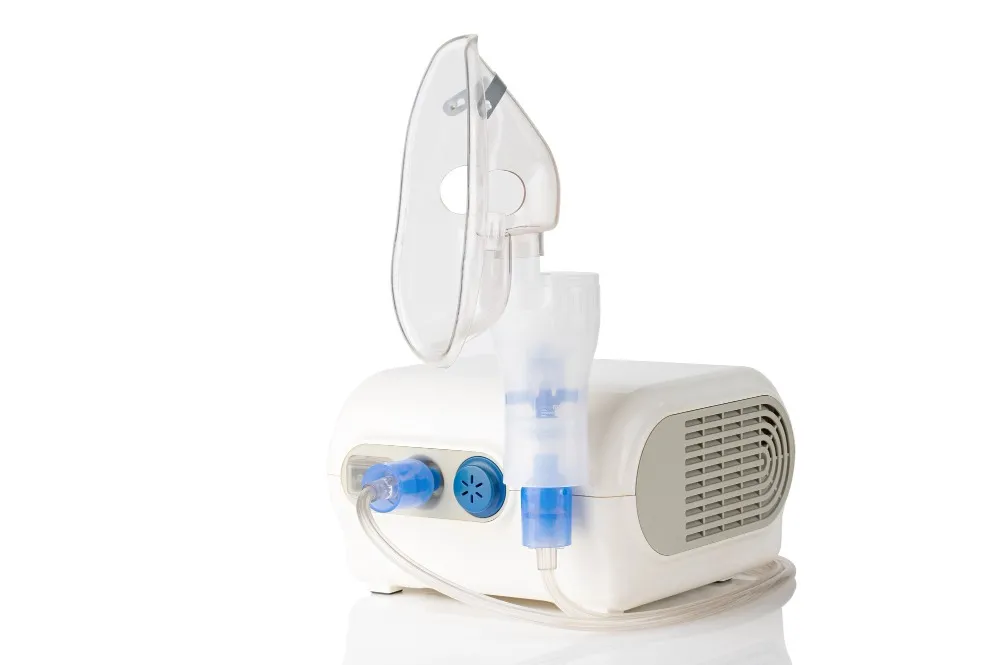
A Nebulizer for Respiratory Care converts compatible liquid medication into an aerosol that can be inhaled through an appropriate interface. Nebulizers are used in various clinical and home-care situations when prescribed or recommended for suitable respiratory treatment.
For hospital procurement managers, purchasing a nebulizer involves equipment specifications, accessories, cleaning requirements, compatibility, maintenance, and ongoing availability. Overlooking these details can create avoidable problems after the equipment reaches the ward or patient.
Mistake 1: Selecting Equipment Only by Price
The lowest quotation is not necessarily the lowest-cost purchasing decision.
A nebulizer may require accessories and consumables during its usable life. If compatible components are difficult to obtain, an inexpensive initial purchase can become inconvenient to maintain.
Evaluate the complete product requirement rather than the equipment price alone.
Mistake 2: Ignoring the Intended Setting
A device intended for occasional individual use may have different requirements from equipment expected to support repeated institutional use.
Before procurement, clarify where the nebulizer will be used:
- Hospital ward
- Outpatient department
- Clinic
- Discharge or home-care programme
- Other appropriate respiratory-care setting
The expected workload can influence equipment selection.
Mistake 3: Overlooking Accessories
A nebulizer system may involve a medication chamber, tubing, mask or mouthpiece, and other model-specific components.
Procurement teams should confirm exactly what is included with the supplied unit.
This prevents a common receiving problem in which the primary device arrives but required accessories are missing or assumed to be included.
Mistake 4: Failing to Plan for Cleaning
Respiratory-care equipment requires careful hygiene.
Cleaning and replacement procedures depend on the equipment, accessories, manufacturer instructions, and institutional infection-control policy.
Reusable components should not simply be transferred between patients without appropriate processing.
Procurement managers can involve infection-control and respiratory-care teams when equipment is intended for institutional use.
Mistake 5: Assuming Every Medication Is Suitable
A nebulizer is a delivery device; it does not determine which medication a patient should use.
Only medication or solutions intended and prescribed for nebulized administration should be used according to appropriate directions.
Hospitals should avoid communication suggesting that nebulization itself treats every cough, cold, breathing problem, or respiratory condition.
Mistake 6: Forgetting Noise and Practical Usability
Depending on the technology and model, nebulizers can differ in operating characteristics.
Practical considerations may include device dimensions, weight, operating noise, setup, portability, treatment workflow, and ease of handling.
For institutional buyers, these factors can affect staff and patient experience.
Mistake 7: Not Checking Repeat Availability
Hospitals rarely purchase medical equipment in complete isolation.
Future requirements may include additional units, compatible accessories, or replacement components. Supply continuity therefore deserves attention before standardising a product.
For hospitals in Thane, a supplier capable of supporting recurring medical-product requirements can reduce procurement fragmentation.
V Karan Pharma serves pharmaceutical and medical-supply requirements in Thane, including respiratory and patient-care equipment. Procurement managers can compare nebulizer specifications and available configurations against their institutional requirements.
Mistake 8: Skipping Receiving Inspection
Every unit should be checked when received.
The receiving process can verify model details, supplied accessories, packaging condition, instructions, quantity, and other relevant documentation.
Electrical medical equipment should subsequently be handled according to the healthcare facility's applicable equipment-management procedures.
Build a Better Nebulizer Procurement Process
A useful procurement workflow begins with clinical requirements, moves through technical specifications, and ends with lifecycle considerations.
When evaluating a Nebulizer for Respiratory Care, ask whether the model suits the intended setting, whether required accessories are available, how cleaning will be managed, and whether repeat supply can be supported.
Healthcare organisations across Thane and Maharashtra can reduce avoidable purchasing problems by making these checks before ordering rather than discovering incompatibilities after equipment has already entered service.
Keywords