The right abdominal belt depends on the operation, incision, drains, stoma, swelling, and the movement you need to support—not simply on your clothing size. By the end, you will know which belt design to compare, how to measure and position it, and how to recognise when the fit is too tight or needs clinical approval.
Key takeaways
- Match belt width and support to your incision and surgeon’s recovery plan.
- Measure your abdomen where the belt will sit, not over your clothing.
- Keep pressure off wounds, drains, and stomas while securing the belt firmly.
- Loosen or remove the belt if breathing, circulation, or movement becomes restricted.
Match the belt to your operation and recovery plan
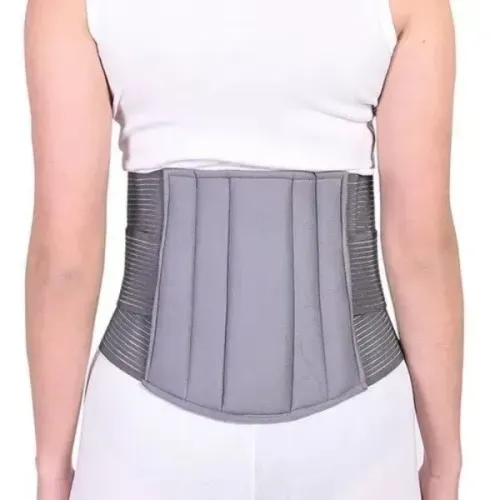
A wide, adjustable post-surgery abdominal belt may suit a midline laparotomy because it spreads pressure across the abdominal wall. The incision, dressing, drains, and movement restrictions determine whether it is safe—not the operation’s name alone.
| Option | Appropriate support | Approval point |
|---|---|---|
| Midline laparotomy | Wide abdominal binder that clears the incision and drains | Ask the operating surgeon before first use |
| Hernia repair | Postoperative binder only if it does not press on the repair or wound; a hernia belt is not a repair | Obtain approval, especially after mesh or complex repair |
| Cesarean delivery | Low-profile abdominal binder that avoids the incision and does not increase pelvic or wound pain | Confirm timing with the obstetric surgeon or midwife; cesarean delivery belt support면 is not a substitute for wound review |
| Ostomy surgery | Ostomy-compatible support with an opening or clearance for the appliance | Select it with the stoma-care nurse or surgeon |
After bariatric surgery, multiple drains, wound separation, infection, or a transverse pelvic incision, do not choose a general abdominal binder by appearance. The garment must leave staples, dressing edges, drains, and stoma appliances unobstructed.
Get surgical approval before wearing any belt over a fresh incision, drain, stoma, open wound, severe swelling, or suspected infection. Ask before use if coughing, walking, or changing position causes sharp pain. A lumbar support belt targets the lower back, while a compression garment shapes or compresses tissue; neither automatically provides suitable abdominal wound support.
An abdominal binder supports comfort and movement, but it does not treat an incisional hernia or replace surgical repair.
Measure your abdomen instead of guessing your size
Take an abdominal circumference measurement with a flexible tape, not your usual trouser or clothing size. Measure at the level named by the manufacturer or clinician; do not automatically use the navel if the instructions specify the widest part of your abdomen.
- Stand upright if you can do so safely, relax your stomach, and breathe normally. If standing is difficult, ask whether you should measure lying down.
- Place the tape flat and level around your body, over a thin layer of clothing or directly on the skin. Keep it snug without pulling it into the skin.
- Record the measurement in centimetres or inches, then repeat it once to check the reading. Use the same unit shown on the abdominal belt size chart.
- Match your number to the chart’s measurement range, not to a small, medium, or large label alone. Choose an adjustable abdominal binder when postoperative swelling is changing your circumference.
| Chart instruction | What to do | Why it matters |
|---|---|---|
| One measurement range | Select the listed size when your reading falls inside it | A close fit supports without relying on clothing size |
| Two overlapping sizes | Ask the clinician or supplier which range suits your current swelling and closure adjustment | The smaller option can compress; the larger one can shift |
| Adjustable range | Check that your measurement sits comfortably within the fastening range | You need room to loosen or retighten as swelling changes |
Measure again if swelling increases, the belt rolls, or its fastening reaches the end of its adjustment. Ask your surgical team to confirm the size when you have a stoma, multiple drains, severe swelling, reduced sensation, or a complex wound.
Position the belt around wounds, drains, and stomas
Place the belt so its firm support rests on intact abdominal wall around the surgical area, not directly on a wound edge or anything attached to it. The panel can cover a clean dressing for incision support only when it lies smoothly and does not press, pull, or rub the incision.
After a midline laparotomy, a laparotomy binder may sit across the abdomen if the dressing, wound margins, and surgeon’s instructions allow it. Placement must change for a low transverse incision, hernia repair, bariatric surgery, or multiple drains; do not force one belt to suit every operation.
- Check that the lower and upper edges clear the incision, staples, dressing edges, and drain sites. If an edge catches when you sit or walk, reposition the belt or stop using it.
- Route each drain outside the belt without bending, pinching, or pulling the tubing. Keep the collection bulb accessible so you can empty and inspect it.
- After ostomy surgery, leave the stoma and pouch completely unobstructed. An ostomy surgery belt needs stoma appliance clearance, and a stoma-care nurse or surgeon should approve the opening, height, and placement.
A belt that shifts onto a wound, blocks drainage, loosens an appliance seal, or causes new pain is positioned incorrectly. Remove it and contact your clinical team if the wound opens, drainage increases, the stoma changes colour, or the appliance leaks.
Set firm support without restricting breathing or movement
It should feel snug and evenly supportive, not tight enough to cause breathing restriction. A suitable compression level lets you take a full breath, cough, eat, change position, and walk without extra pain or effort; tighter is not better.
- Put the belt on while sitting or lying in the position your care team recommends. Place it over the clothing or dressing layer instructed by your clinician, align the closure without crossing the incision, then fasten it evenly rather than pulling one side tight.
- Take several deep breaths, cough, and move from sitting to standing. Loosen the belt if breathing, abdominal movement, eating, walking, or changing position becomes harder.
- Remove it by opening the closure slowly and supporting the area with your hand if coughing or movement hurts. Do not drag the belt across the incision, wound dressing, staples, drains, or stoma appliance.
- Check the skin after removal and during routine breaks. Look for persistent redness, blisters, swelling, bruising, moisture, numbness, or broken skin, and stop using the belt until your surgical team advises you.
Good abdominal binder fitting requires an adjustable closure and enough access to inspect the skin and dressing. Ask for individualized fitting before use if you have lung disease, major swelling, reduced sensation, fragile skin, substantial obesity, or a complex wound; pressure injuries and breathing problems can go unnoticed.
Compare construction, closure, and wear schedules before buying
A good daily-recovery choice balances support with easy breathing, coughing, eating, walking, and position changes. Compare these features before buying:
| Feature | Compare | Why it matters |
|---|---|---|
| Construction | A wide adjustable binder versus a narrow, fixed band | Wider panels spread pressure, while adjustable sections accommodate swelling and dressings. |
| Closure | A Velcro closure abdominal belt versus hooks or a fixed seam | Velcro allows small adjustments during the day without replacing the garment. |
| Edges and seams | Flat, soft edges and seams that stay away from the incision | Rough edges can rub staples, dressing borders, drains, or an ostomy appliance. |
| Purpose | A postoperative abdominal binder versus a lumbar support belt | A lumbar support belt targets the lower back, not the healing abdominal wall. |
| Garment type | An abdominal binder in a compression garment comparison | Shaping garments can compress broadly but may not leave room for wounds, drains, or stoma equipment. |
V. Karan Pharma’s hernia and L.S. belt categories show why the product name is not enough: choose by body area, surgical site, and clinician instructions rather than assuming every support belt works after abdominal surgery.
Ask the operating clinician how long to wear the belt, whether to use it during sleep, and when to remove it for skin checks or bathing. Follow that protocol; schedules differ with the operation, drains, wound condition, and mobility.
- Stop and seek advice if breathing, eating, coughing, walking, or changing position becomes harder.
- Check the skin after removal for persistent redness, blisters, numbness, or drainage.
- Keep the stoma and appliance fully unobstructed; involve the stoma-care nurse or surgeon before choosing the garment.
Related product
 | Customize Product V Karan Pharma, Kalwa Thane, is a trusted supplier of high-quality hernia belts designed for comfort, support, and effective pain relief. View product → |
Frequently asked questions
How do you choose an abdominal belt after surgery?
Match the belt to your operation, incision location, dressing, drains, stoma, and movement restrictions. Follow your surgeon’s recovery plan rather than choosing by operation name alone.
How should you measure for a postoperative abdominal belt?
Measure your abdomen at the level where the belt will sit. Take the measurement while standing if permitted, keep the tape level, and do not pull it tight or measure over bulky clothing.
Where should an abdominal belt sit around a wound, drain, or stoma?
Position the belt so it supports the abdominal wall without pressing directly on the incision, dressing, drain tubing, or stoma. Ask your clinical team to check the position when these are present.
How tight should an abdominal belt be?
Set firm, even support that does not restrict deep breathing, coughing, circulation, or normal permitted movement. Loosen it if you feel short of breath, numbness, increasing pain, or skin pressure.