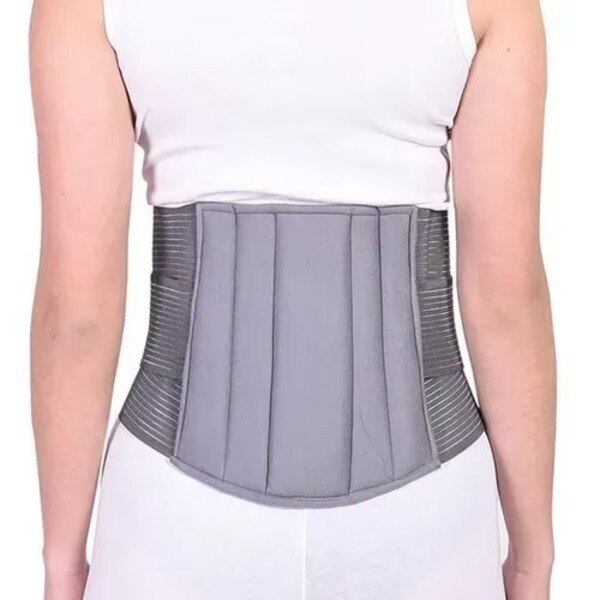
An L.S. belt can offer useful support during a defined activity or period of recovery, but it is not a routine cure for ordinary low-back pain. You will be able to decide whether you need a belt, distinguish it from other braces, check its fit, and use it without overlooking symptoms that require medical care.
Key takeaways
- Do not use an L.S. belt to diagnose or replace treatment for back pain.
- Match the support to your pain, activity and clinician’s recommendation.
- Measure your waist and choose a snug fit that allows comfortable breathing.
- Wear the belt for limited activities, not continuously throughout recovery.
Is an L.S. belt appropriate for your type of back pain?
An L.S. belt for back pain is usually not a first choice for temporary discomfort, muscle strain, prolonged sitting, lifting-related pain or postural fatigue. A lumbar support for muscle strain may feel reassuring, but it does not identify the cause or replace movement and exercise.
NICE low-back pain belt guidance recommends not offering belts or corsets for low-back pain, with or without sciatica. The WHO guideline also advises against routine lumbar braces, belts or supports for chronic primary low-back pain because meaningful benefit is limited.
Cochrane evidence remains uncertain: reviews found low- or very-low-certainty evidence for preventing or treating low-back pain, no clear advantage over no support or other treatments, and poorly reported adverse effects.
Arrange medical assessment rather than choosing a belt if you have:
- New loss of bladder or bowel control
- Numbness around the saddle area
- Progressive weakness in a leg
- Numbness in both legs
- Fever
- Unexplained weight loss
- Major trauma
- Pain that persists or worsens
These back pain red flags require attention; do not self-select a support.
A diagnosed spinal condition, fracture, instability, deformity or recovery after a spinal procedure is different. A clinician may prescribe an L.S. belt or a more restrictive brace for a defined period, while persistent nonspecific pain is managed around active treatment, including prescribed exercise and normal activity.
Which kind of back support matches the problem?
Match the support to the structure and the restriction you actually need, not to the label “back belt.”
| Option | What it provides | When it fits |
|---|---|---|
| Soft lumbar support | Compression, warmth and sensory feedback; no true immobilization | Temporary muscle strain, lifting discomfort or postural fatigue |
| Semi-rigid or rigid lumbosacral orthosis | More movement restriction; bulkier and harder to use while sitting or bending | Selected instability, deformity or clinician-directed spinal support |
| Thoracolumbosacral brace | Restriction extending from the thoracic spine through the lumbar and sacral regions | Conditions requiring control higher up the spine |
| Posture corrector | Cueing to reduce slouched shoulder and trunk positions | Postural awareness, not treatment for a spinal diagnosis |
| Sacroiliac belt | Narrow pelvic support positioned low near the greater trochanters | Suspected sacroiliac joint or pelvic support needs |
| Post-surgical or injury brace | A prescribed level of protection and motion control | Recovery after a procedure, fracture or significant injury |
The key location question is sacroiliac belt versus L.S. belt: an LSO covers the lumbar and sacral region, while an SI belt sits lower around the pelvis. Choosing the wrong location can leave the suspected pain source unsupported.
For a fracture, procedure, instability or deformity, the treating clinician chooses the required restriction. A rigid lumbosacral orthosis is not automatically better; excess restriction adds bulk and interferes with daily movement. A posture corrector cannot replace diagnosis or treatment.
What features, measurements and fit should you compare?
Compare brace construction, measurements and fit—not just S to XXXL. A soft belt offers compression and sensory feedback; more rigid lumbar belt stays restrict movement but can make sitting and bending difficult.
| Feature | What to compare | Why it matters |
|---|---|---|
| Stays | Number, length and placement of lumbar belt stays | More stays can limit bending; poor placement can create pressure points |
| Panel | Elastic-panel width and abdominal height | Determines coverage, flexibility and comfort while sitting |
| Closure | Hook-and-loop width, pull tabs or other closure | Shows how easily you can adjust compression |
| Fabric | Breathability, moisture handling and smooth edge finishing | Reduces heat, rubbing and skin damage |
| Movement | Whether the design limits bending for your intended task | A rigid belt can hinder driving, lifting or desk work |
For how to measure for an L.S. belt, stand relaxed and use the body landmark named by that product’s lumbar belt size chart: waist or hip, not an assumed location. Measure over the clothing layer you will wear.
If you fall between sizes, follow that chart’s instruction or ask the supplier; manufacturer charts are not interchangeable, so do not transfer a size from another brand.
Check that the belt covers the lumbar and upper sacral area, follows your pelvic contour and remains tolerable when sitting. Its edges must clear the ribs, groin and iliac crest. It should not cause numbness, tingling, increasing pain, skin breakdown, breathing restriction or abdominal symptoms.
An adjustable lumbar support that fails these checks needs refitting, not tighter fastening.
How tightly and how long should you wear an L.S. belt?
How to wear a lumbar belt: centre it over the lumbar region and upper sacrum, with the lower edge resting above the buttocks rather than across the groin. Fasten it firmly enough to stay in place, but not so tightly that it compresses your abdomen or restricts a full breath.
How tight should a back support be? Recheck it while standing and sitting. Your torso changes shape when you bend at the hips, so a closure that feels comfortable upright can press into the abdomen when seated.
| Wearing method | Advantage | Main concern |
|---|---|---|
| Over a thin shirt | Reduces friction and makes removal easier | Heat and fabric folds can still cause pressure spots |
| Against the skin | Gives direct contact for a closer fit | Sweat, rubbing and lumbar belt skin irritation can develop quickly |
Inspect the skin after removing it. People with diabetes, reduced sensation, poor circulation, fragile skin or cognitive impairment need frequent checks and fitting guidance because pressure damage may develop without warning pain.
Follow the schedule supplied by your clinician or the product instructions. Do not assume all-day or sleep use is safe; prolonged unsupervised wear can encourage reliance, reduce normal movement and cause irritation.
When to remove a back brace: loosen or remove it immediately if breathing becomes restricted, or if you develop numbness, tingling, increasing pain, skin breakdown, marked colour change or abdominal symptoms. Seek reassessment rather than tightening it further.
How should a belt fit into recovery instead of replacing it?
Use an L.S. belt as a temporary aid for a specified task or healing period, not as a cure. Persistent nonspecific low-back pain is managed around normal activity, prescribed exercise and movement; manual therapy belongs only within an exercise-based plan when appropriate.
- Set a purpose and schedule with your clinician: support during a defined activity or protect healing tissue, rather than wearing it automatically all day or during sleep.
- Keep moving within your instructions. Take regular back pain sitting breaks, change position, and avoid using the belt to lift more, bend through pain or skip rehabilitation.
- Practise safe lifting with back pain: bring the load close, use your hips and knees, avoid twisting, and ask for help with heavy or awkward objects.
- Follow clinician-directed heat or cold instructions. Do not invent a temperature, duration or activity limit because a belt feels supportive.
A belt that increases reliance, restricts normal movement or irritates your skin is not serving recovery. Ask for review before buying if your purpose is unclear, your pain is worsening, or the support is intended after a procedure, fracture or for instability.
V. Karan Pharma or another seller should be able to explain the fitting and use conditions, not only provide a size label.
Use this L.S. belt buying checklist:
- Clinical purpose
- Exact size landmark
- Height and stay construction
- Closure and adjustment
- Wearing schedule
- Cleaning instructions
- Return, exchange or fitting support
Related products
 | Customize Product L.S. Belt Customized L.S. Belt (Lumbo Sacral Belt) is designed to provide firm support to the lower back and spine, helping reduce pain, strain, and discomfort... |
 | Customize Product Customized Magnetic Belt is designed to provide effective support and relief from back pain, muscle stiffness, and joint discomfort. View product → |
Frequently asked questions
Is an L.S. belt suitable for every type of back pain?
No. An L.S. belt is not a first choice for temporary discomfort, muscle strain, prolonged sitting, lifting-related pain or postural fatigue. It does not identify the cause of pain or replace movement and exercise.
How do you choose the right type of back support?
Match the support to the problem and intended use. Compare lumbar coverage, rigidity, adjustment, breathability and whether a clinician has recommended external support for your condition.
How tightly should you wear an L.S. belt?
Wear it snugly enough to support the lower back without restricting breathing, causing numbness, increasing pain or pressing sharply into the abdomen. Recheck the fit while sitting and standing.
How long should you wear an L.S. belt?
Use it for the activity or period for which support is needed rather than continuously. Keep movement, exercise and any prescribed treatment as the foundation of recovery.