A custom lumbosacral belt starts with a clinical decision and a measured fitting, not a trouser size or a generic promise of pain relief. You will learn which measurements and medical details to prepare, how to compare custom and ready-made designs, how to wear and maintain the belt, and when back pain needs medical assessment instead of external support.
Key takeaways
- Use a custom LSO when prescribed fit and movement control matter.
- Provide waist, hip, spinal measurements, diagnosis, and activity details.
- Compare rigidity, closures, padding, height, and removable stays before ordering.
- Clean the belt as directed and replace it when fit or support changes.
Is a custom LSO appropriate for your back problem?
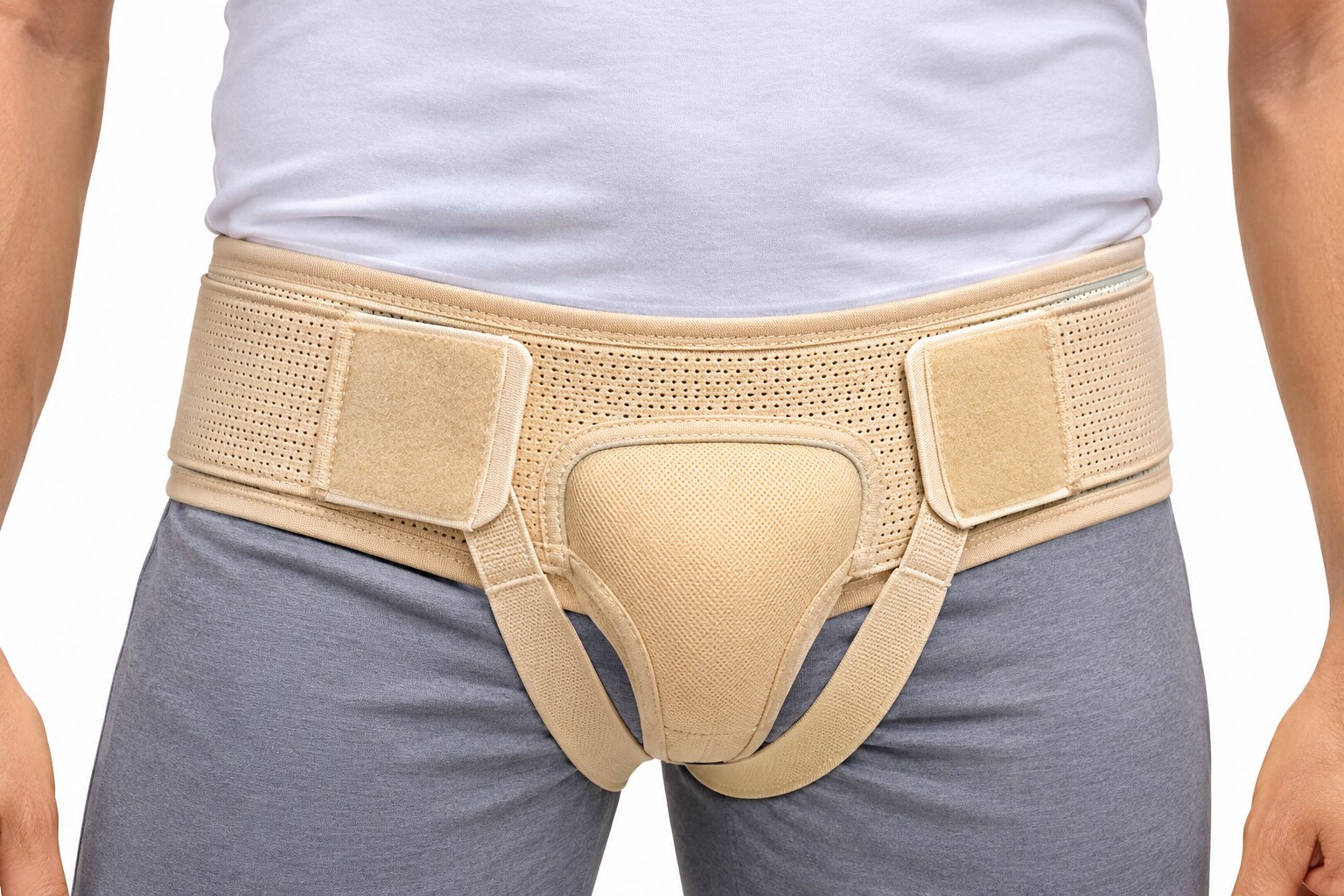
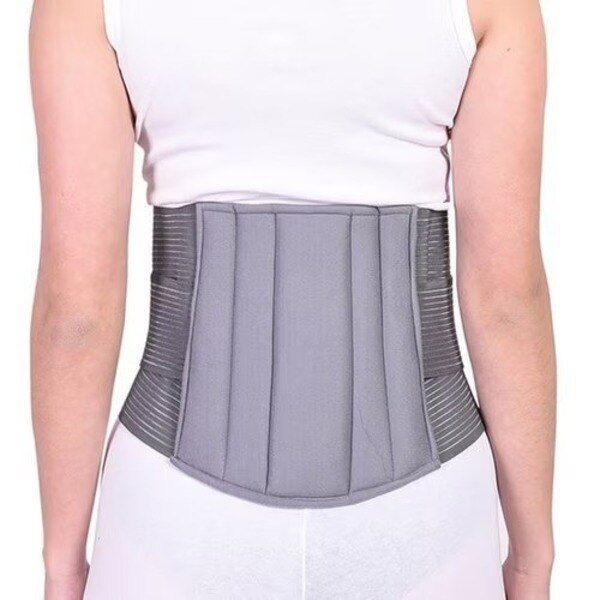
An LSO (lumbosacral orthosis) is designed to limit selected lumbar movement and support part of the lumbar and sacral regions. It can provide short-term stability or symptom relief, but it does not realign the spine, repair a disc, or diagnose why your back hurts.
| Product | Main function | Limitation |
|---|---|---|
| LSO | Supports lumbar and sacral regions; limits selected movement | Does not treat the underlying cause |
| Narrow elastic waist support | Provides compression and warmth | Not equivalent to an LSO |
| Custom orthopedic belt | Shapes support for unusual contours or prescribed needs | Custom fitting does not guarantee better outcomes |
Evidence that lumbar belts prevent recurrence or improve long-term outcomes is mixed. NICE advises against routinely offering belts or corsets for low back pain, with or without sciatica.
A clinician may prescribe one for a selected postoperative case, instability, deformity, unusual support needs, or difficulty fitting an off-the-shelf product. Your l s belt details should include the support level and wearing schedule, not only the size.
Stay active within tolerance, follow rehabilitation, and progress strengthening; do not use a belt to justify bed rest.
Get medical assessment before ordering if you have:
- New bladder or bowel difficulty
- Saddle numbness
- Progressive leg weakness
- Major trauma
- Fever, unexplained weight loss, or a history suggesting cancer or infection
What measurements and clinical details belong in a custom order?
A reliable custom order needs more than a waist number. The fitter must document the intended lumbar or sacral coverage and take measurements, a mold, or a scan in a defined posture.
1. Give the waist or hip circumference at the level specified by the fitter. Record the belt height from its intended upper edge to its lower edge; waist size alone cannot determine lumbar or sacral coverage.
2. Describe the clinical need: pain location, lumbar or sacral level, the side requiring support, and whether pain travels into a leg. Add your posture, daily activity demands, abdominal shape, skin condition, surgical scars, relevant medical history, and the prescribed support level.
3. Ask how the custom orthopedic belt will be made and checked. Confirm who handles prescription, measurement, fabrication, fitting, alterations, and follow-up; whether the process includes a trial fitting; how long delivery takes; and whether a custom-built device can be exchanged or returned after fabrication.
Custom fitting is most useful for asymmetry, unusual contours, a large abdominal circumference, surgical requirements, a specified rigidity, or repeated failure with ready-made belts. It does not automatically make the device medically superior; its value is more accurate shape and pressure distribution.
A request for a custom L S belt Kalwa should follow clinical assessment, not replace it. Also ask whether the support covers the prescribed area while sitting, walking, and working.
How to measure at home and place the order in Kalwa
Use a soft tape and measure the circumference at the exact waist or hip level specified for the belt. Stand naturally, keep your abdomen relaxed, hold the tape level, and make it snug without tightening or compressing your body.
- Follow the selected fitting method: measure directly against the body if the fitter requests a skin measurement, or over a thin vest if that is how the belt will be worn. Never measure over a sweater, jacket, or bulky clothing.
- Repeat the measurement twice. Record the number, posture, measuring level, whether you measured over a vest or skin, and the date.
- Do not replace circumference with trouser size. Trouser cuts, rise, stretch, and waistband position differ, so the same labelled size can represent different body measurements.
- Take these items to an in-person fitting: your prescription or clinician note, relevant scan or procedure information, current belt if you have one, symptom list, usual clothing, and details of sitting, lifting, driving, and work demands.
- Before ordering an L S belt for back pain custom order in Kalwa, Thane, confirm who measures and fits it, whether the appointment is at the supplier or a clinic, and whether a trial and adjustment visit is included. Ask about fabrication time, alterations, and return rules before measurement.
V. Karan Pharma can be a local point to ask about availability, measurement arrangements, and follow-up; it should not replace the clinician who prescribes the support. If you are seeking a custom L S belt Kalwa, provide the recorded measurement rather than ordering from a trouser size alone.
Related product
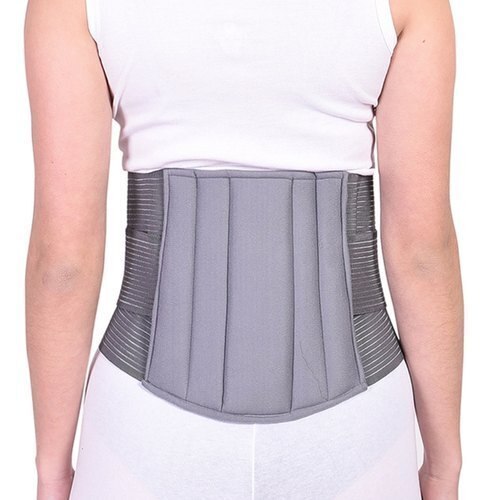 | Customize Product L.S. Belt Customized L.S. Belt (Lumbo Sacral Belt) is designed to provide firm support to the lower back and spine, helping reduce pain, strain, and discomfort... |
Which design details should you compare before choosing?
Compare coverage and pressure control before comparing logos or size labels. A small-to-XXXL, all-size, contoured, or Tynor belt can fit well—or fail badly—because brand name and size range do not establish suitability. The useful L S belt details include support level, height, closure, rigidity, material, and wearing schedule.
| Option | What it provides | Main limitation |
|---|---|---|
| Custom build | Shaped coverage and pressure distribution for unusual contours, asymmetry, surgery, or repeated fitting failure | Not automatically medically superior; needs measurement, fitting, and adjustment |
| Ready-made small-to-XXXL or all-size | Immediate, simpler sizing and lower ordering effort | Standard shape may migrate or press unevenly |
| Contoured belt | Pre-shaped support around the waist and lower back | The contour may not match your abdomen or pelvis |
| Tynor or another named brand | A defined product design and published size range | The label does not prove the right coverage or support level |
Check these design details before ordering:
- Belt height and whether it covers the prescribed lumbar and sacral levels.
- Whether it is a true LSO spanning part of both regions, or a narrow elastic waist support offering mainly compression and warmth.
- Closure type, adjustability, rigidity, and the number and placement of stays.
- Elastic-panel arrangement, breathability, edge finishing, and pressure distribution around the pelvis.
- Whether it protects the sacral area, accommodates the abdomen and pelvic bones, and stays in place during sitting, walking, and leg movement.
Ask for the intended support level and wearing schedule. Judge a custom orthopedic belt by fit and function, not appearance alone, when choosing a back pain belt in Thane.
How should you wear, inspect, clean, and replace the belt?
Wear the belt over the lower back and pelvis in the position prescribed by your clinician. Fasten it firmly, but do not force the abdomen inward. Check that you can breathe, sit, walk, and move your legs without restriction.
Wear it over a thin vest or directly on the skin according to skin tolerance and the selected model.
Introduce wear gradually and follow the clinician’s task-specific schedule. Remove it for sleep unless you were specifically told to keep it on. Keep the skin dry, then inspect pressure areas after use:
- Ribs and pelvic bones
- Surgical scars and other prominent areas
- Skin beneath stays, seams, and closures
- Any area showing redness, numbness, tingling, swelling, sweating, or increased pain
Stop wearing it and seek clinical review if these symptoms persist or worsen. A tight belt worn too long without review can create pressure, heat, and reduced participation in active rehabilitation.
Read the selected model’s care label before washing; some LSO belts are hand-wash only. Use the specified mild detergent, do not wring the belt or expose it to high heat, and air-dry it flat or as directed. Do not bend or crush elastic panels or stays.
Arrange replacement or refitting when stretch is lost, stays become distorted, edges fray, closures break, or the fit remains poor. These are important L S belt details, not cosmetic faults. A back pain belt in Thane is an adjunct to care, not a reason to abandon movement, exercise, rehabilitation, or progressive strengthening.
Frequently asked questions
Is a custom LSO appropriate for every back problem?
No. An LSO can limit selected lumbar movement and provide short-term stability or symptom relief, but it does not diagnose pain, realign the spine, or repair a disc. Ask a clinician whether you need a custom orthosis.
What details are needed for a custom LSO order?
Provide the prescription or clinical diagnosis, intended use, lumbar and sacral support requirements, waist and hip measurements, body shape details, activity level, and any skin or comfort concerns.
Can I measure for a custom LSO at home?
Take measurements over the clothing you will wear under the belt, following the supplier’s instructions. Record waist and hip circumference, torso height, and the location of painful or sensitive areas, then confirm the measurements with the fitting provider.
Which custom LSO design features should I compare?
Compare rigidity, posterior height, abdominal coverage, closure type, padding, ventilation, removable stays, adjustability, cleaning instructions, and how easily you can sit, bend, walk, and use the toilet.
How should I care for and replace an LSO belt?
Wear it according to the prescription, inspect seams, closures, stays, and padding regularly, and clean it using the manufacturer’s instructions. Stop and request a refitting if it causes numbness, skin injury, breathing difficulty, or worsening pain; replace it when materials lose support or your body or prescription changes.
Keywords