Discomfort often comes from pressure, poor fit, excess heat, or a support device that changes how your body rests and moves. By the end, you will know how to match a pillow or foot device to your position, shoe, symptoms, and safety needs—and when comfort products are not enough.
Key takeaways
- Choose pillow height by keeping your head level with your spine.
- Replace or reposition insoles when they cause numbness, rubbing, or new pain.
- Use heel cups for heel support; choose full-length insoles for broader foot support.
- Seek clinical assessment for persistent pain, swelling, weakness, or altered sensation.
How a Memory Foam Pillow Supports Your Head and Neck
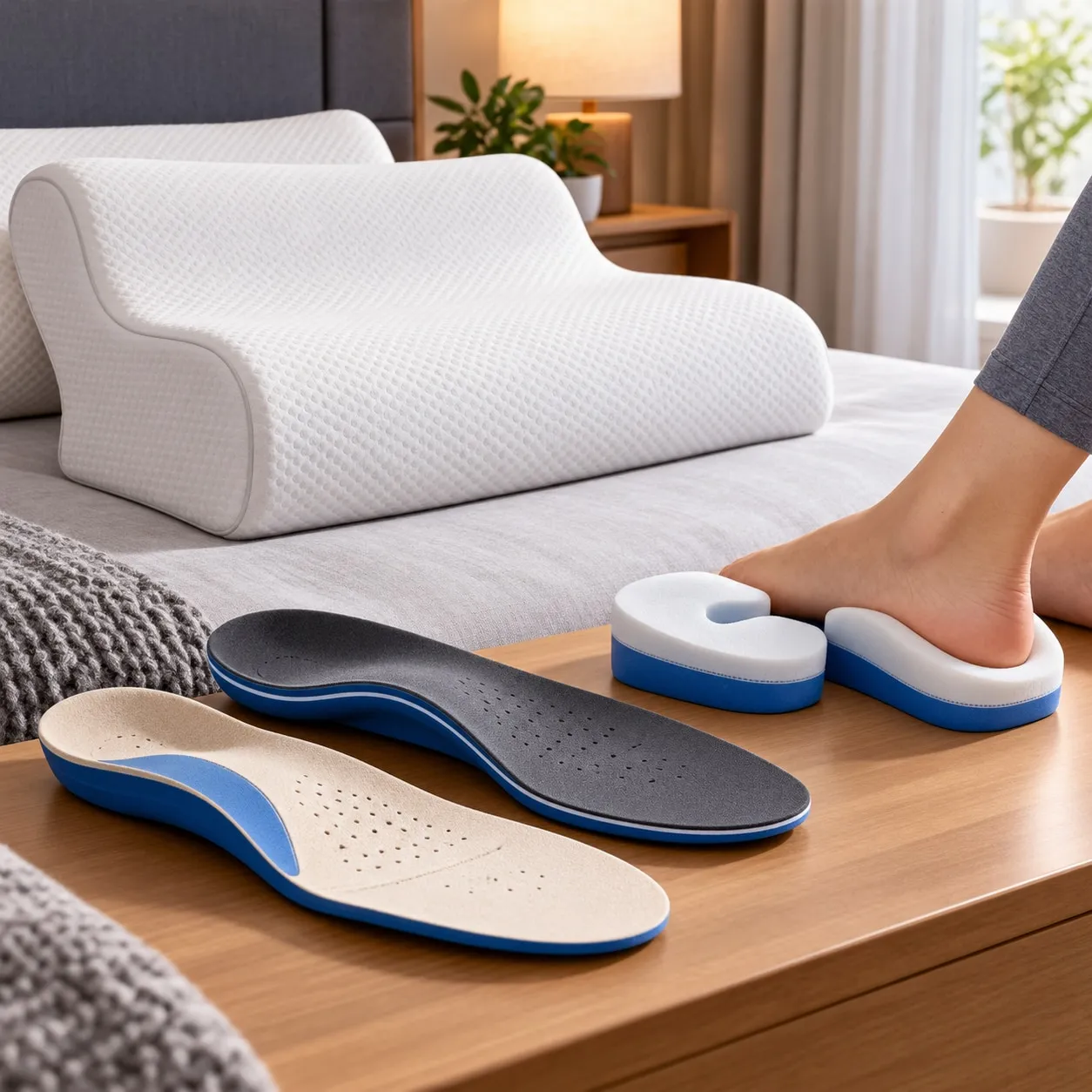
Memory foam improves sleep comfort by slowly deforming around your head and neck. This creates memory foam pressure distribution: contact load spreads over a broader area instead of concentrating at one spot.
The result can feel less compressed, but memory foam alone does not prove that it will reduce neck pain; pillow height and firmness, shape, sleeping position, and your body shape matter just as much.
A pillow provides head and neck support correctly when it keeps your neck in a neutral neck position, level with the rest of your spine rather than bent upward, downward, or sideways. Check the fit in your usual sleeping position:
- On your back, your chin should not tilt toward your chest or point upward.
- On your side, the pillow should fill the gap between your ear and mattress without pushing your head toward the ceiling.
- On your stomach, notice that prolonged neck rotation remains a problem even with a thin pillow.
Morning neck stiffness, headache, arm tingling, or pain that repeatedly worsens after sleep signals a poor match. A pillow that feels firm and supportive at first can still be too tall or rigid. Lower the height, change the shape, or stop using it rather than adding firmness.
If the foam stays permanently compressed or develops a pressure spot, it no longer provides dependable support.
Choosing and Caring for a Memory Foam Pillow
Choose a pillow height that keeps your neck level with your spine: side sleepers need more loft, back sleepers need moderate support, and stomach sleeping usually requires the thinnest option or no pillow.
| Position | Suitable shape and height | What to check |
|---|---|---|
| Side | A higher, firmer pillow or contoured edge that fills the shoulder-to-neck gap | Your head should not tilt toward the mattress |
| Back | A medium-height back sleeper pillow with a shallow neck contour | Your chin should not be pushed toward your chest |
| Stomach | A very low, soft pillow, or sleeping without one | Rotation remains a risk even with minimal height |
A side sleeper pillow height should match your shoulder width and mattress firmness, not a fixed measurement. A thick pillow can feel supportive at first but cause morning neck stiffness, headache, or arm tingling if it bends your neck upward.
Consider the memory foam body heat response and recovery time before buying. Dense foam restricts airflow and can feel warmer than fiber or latex; perforations, shredded foam, ventilation channels, and breathable covers reduce heat without guaranteeing a cool surface. Slow recovery also means the pillow may take time to regain its shape after you move.
Choose a removable, machine-washable cover, and follow its care label. Do not machine-wash solid foam unless the manufacturer explicitly permits it; spot-clean the foam and dry it completely. Replace it when permanent compression, cracking, persistent odor, moisture damage, or a new pressure spot appears.
Heel Cushions, Heel Cups, Gel Pads, and Full-Length Insoles Compared
The main difference is where each product acts. A heel cushion sits under the heel to soften contact; a heel cup surrounds the heel and helps keep cushioning positioned.
A gel heel pad uses gel to spread load and absorb some shock, while a full-length foot insole supports or cushions the heel, arch, and forefoot across the shoe.
| Option | Main action | Best fit |
|---|---|---|
| Heel cushion | Adds soft material under the heel | Heel impact and pressure reduction during walking or standing |
| Heel cup | Cradles the heel and limits sideways movement of the cushion | A cushion that shifts, or pressure concentrated at the heel |
| Gel heel pad | Spreads load through a flexible gel layer | Hard floors, firm shoe soles, or repeated heel contact |
| Full-length foot insole | Changes cushioning across the whole foot | Discomfort involving the heel and forefoot, or a shoe needing more overall padding |
A heel cushion can make common overuse discomfort easier to tolerate, including soreness after long standing, walking on hard surfaces, or repeated heel strikes. It does not correct the tissue problem, foot mechanics, gait, or a painful condition’s underlying cause; relief does not prove healing.
An insole is not automatically an arch correction. A rigid, high arch can create pressure under the arch or forefoot, while a soft insole may cushion without controlling motion.
Check shoe fit after adding any device. A raised heel can cause slipping, rubbing at the back of the shoe, or reduced stability. Stop and seek clinical advice for persistent redness, blisters, skin breakdown, or color change, especially with diabetes, reduced sensation, neuropathy, or poor circulation.
How to Choose and Introduce a Foot Insole
A flat-looking foot does not automatically need arch correction. Choose an insole for the discomfort you want to reduce, then check how its shape works with your foot and shoe. A soft model can cushion without controlling motion; a rigid, high arch can create pressure beneath the arch or at the metatarsals.
| Option | Main purpose | Shoe compatibility |
|---|---|---|
| Cushioning insole | Reduces impact and pressure | Works best in shoes with removable footbeds and enough toe room |
| Prefabricated arch support | Adds moderate support for comfort | Check that the arch contacts your foot without creating a hotspot |
| Rigid motion-control insole | Limits selected foot movement | Needs a stable, roomy shoe; avoid forcing it into a tight casual shoe |
Compare insole stiffness and thickness against the shoe’s available space. Check shoe fit and heel lift together: a thick insole can raise your heel, cause slipping at the back, reduce stability, and leave too little room for your toes.
Remove the factory footbed if the replacement lies flatter that way; never stack them when the shoe feels tight.
Start with a gradual insole break-in. Wear it for a short period, inspect your skin, and increase use only if the device stays flat without buckling, rubbing, numbness, or concentrated pressure.
For plantar heel pain, a well-fitted prefabricated arch support or heel cushion is a reasonable conservative choice; pair it with suitable footwear and any stretching or activity changes recommended for your symptoms.
When Comfort Products Need a Safety Check or Clinical Assessment
Stop using a pillow, heel cushion, or insole if it causes worsening pain, numbness, rubbing, a new pressure point, or unstable walking. For heel pain, seek clinical assessment for sudden severe pain, inability to bear weight, marked swelling or bruising after an injury, numbness, an open wound, or pain that persists despite rest.
| Situation | Action | Why it matters |
|---|---|---|
| New insole or heel cushion causes redness, blistering, or rubbing | Remove it and inspect the area | A tight fit or raised heel can create friction and reduce stability |
| Diabetes, neuropathy, reduced sensation, or poor circulation | Get advice before using an unfamiliar foot device; perform regular foot checks | You may not feel pressure points, skin damage, or a blister developing |
| Pillow causes neck pain, arm tingling, or headaches | Stop using it and seek assessment if symptoms continue | Its height or shape may be bending your neck rather than supporting it |
| Foam stays flattened, cracks, smells, holds moisture, or no longer relieves symptoms | Replace the device | Foam compression and replacement depend on lost function, not a universal date |
With diabetes and neuropathy foot-device precautions, make pressure-point checks part of your routine: look for persistent redness, blistering, skin breakdown, swelling, or colour change and seek prompt clinical advice for any of them. Introduce a new insole for short periods; ensure it lies flat, leaves toe room, and does not make the shoe tight.
A supplier such as V. Karan Pharma can help you compare thickness, heel height, firmness, material, shoe volume, and return or replacement terms before you choose. Ask which option suits your footwear and whether stacking it over the factory footbed will create pressure.
Related product
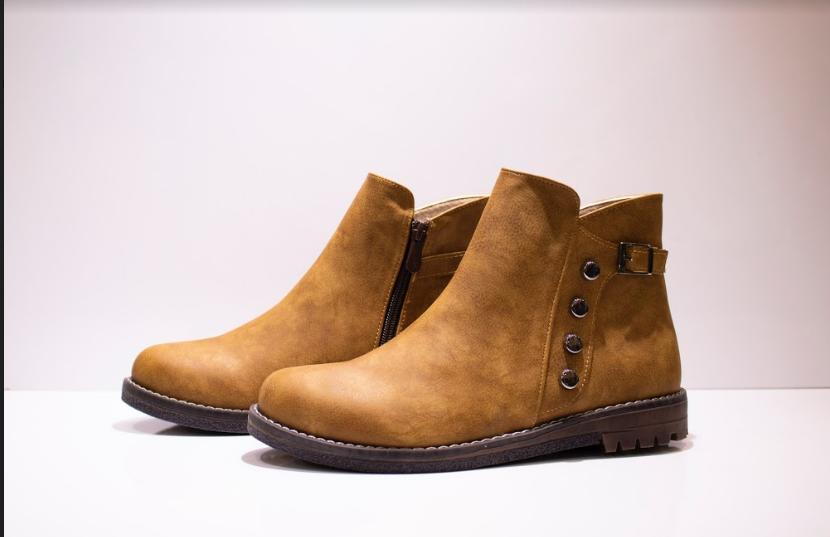 | Other Product Corrective Shoes are specially designed orthopedic footwear that helps improve foot alignment, posture, and walking pattern. View product → |
Frequently asked questions
How does a memory foam pillow support your head and neck?
It slowly deforms around your head and neck, spreading contact load and helping keep your spine aligned.
How do you choose and care for a memory foam pillow?
Choose a height that keeps your head level with your spine, use a washable cover, and follow the care label for cleaning and drying.
What is the difference between heel cushions, heel cups, gel pads, and full-length insoles?
Heel cushions and gel pads target impact at the heel, heel cups cradle the heel, and full-length insoles support more of the foot.
How should you choose and introduce a foot insole?
Match the insole to your footwear and comfort goal, then wear it for short periods before gradually increasing use.
When do comfort products need a safety check or clinical assessment?
Stop using a product and seek assessment for persistent or worsening pain, numbness, swelling, skin damage, weakness, or walking difficulty.