Choose the bed around the patient’s transfers, pain, mobility, and the work the caregiver must perform, then match toileting equipment to what the patient can safely do. By the end, you will know what to measure, what to inspect on delivery, how to position and clean each item, and when home equipment is no longer enough.
Key takeaways
- Choose the bed around transfers, repositioning, washing, and overnight supervision.
- Measure doorways, corridors, turning space, and bed height before delivery.
- Match the mattress and rails to skin condition, mobility, and fall risk.
- Choose toileting aids the patient can reach, position, and clean without pain.
Choose the Bed Around Transfers, Care Tasks, and Patient Risk
Choose a hospital bed or adjustable home-care bed when the patient needs frequent repositioning, bedside washing, assisted transfers, or overnight observation. A standard bed with add-on supports suits someone who can transfer reliably and needs occasional help.
Back and leg elevation improves positioning; height adjustment lets caregivers work without repeated bending and lowers the bed for sit-to-stand transfers.
| Option | Best fit | Main limitation |
|---|---|---|
| Hospital bed | High care needs, frequent transfers, limited mobility | Requires room for controls, rails, and access |
| Adjustable home-care bed | Home use with electric positioning and caregiver support | Verify mattress, rail, and accessory compatibility |
| Standard bed with add-on supports | Independent transfers and light assistance | Fixed height and limited emergency access |
Before ordering, check these safety points:
- Match the mattress, rails, and frame as one system. A mattress that is too thick or narrow can reduce effective rail height or create entrapment gaps.
- Treat a profiling bed as a positioning aid, not a pressure-injury treatment. For adults at high pressure-ulcer risk, ask about a high-specification foam mattress and reassessment when mobility or skin condition changes.
- Compare the manufacturer’s safe working load with the patient, mattress, bedding, rails, lifting pole, and every attached accessory—not body weight alone.
- Choose caster locks, accessible controls, and rapid lowering or emergency access when caregivers must respond quickly.
- A low bed reduces fall distance but can make standing, floor-level hazard control, and caregiver access harder.
Measure the Route and Check the Bed Before Anyone Uses It
Confirm the bed’s route, room clearance, and safety controls before the patient transfers onto it.
1. Measure the room measurement from wall to wall, then mark the bed’s full length and width on the floor with tape. Leave enough space for the carer to reach both sides, lock the casters, open a side rail, perform a transfer, and reach the patient quickly during an emergency.
2. Measure the doorway width with the door fully open, including the narrowest point around frames or hinges. Check every corridor, turn, threshold, staircase, and bathroom route; record the lift measurement603? and compare each figure with the bed’s packaged and assembled dimensions. Ask the supplier whether the bed arrives assembled or folded.
3. Before accepting delivery, inspect the frame, mattress platform, wheels, caster locks, hand control, and power cable. Route the cable away from walking paths and moving joints, confirm that the controls are accessible to the user or carer, and ask how to lower the bed or raise the back during a power failure.
4. Read the manufacturer’s safe working load. It must cover the patient, mattress, bedding, side rails, lifting pole, and every attached accessory—not the patient’s weight alone.
5. Assemble the bed exactly as instructed, fit only the specified mattress, and test every position without the patient aboard. Check that the mattress does not shift, gaps do not appear beside the rails, the bed remains stable, and emergency access is not blocked.
Match the Mattress and Side Rails to Skin, Mobility, and Fall Risk
Choose the mattress for skin risk and movement, then assess side rails separately. A profiling bed that raises the back and knees does not provide pressure relief by itself; the mattress, repositioning schedule, moisture control, and daily skin checks work together.
A waterproof mattress cover helps manage incontinence, but a non-breathable surface can trap heat and moisture. Match mattress firmness to the patient’s body, comfort, posture, and ability to move: excessive firmness can increase pressure at the heels, sacrum, and hips, while excessive softness can make turning and transfers harder.
| Mattress choice | Best fit | Main warning |
|---|---|---|
| Standard foam mattress | Mobile patients with low pressure-ulcer risk | It may not provide enough pressure redistribution for reduced mobility |
| High-specification foam mattress | Adults at high risk of pressure ulcers | Confirm the patient’s weight range and inspect the cover for damage |
| Alternating-pressure mattress | Patients needing active pressure redistribution after clinical assessment | Noise, pump failure, tubing, and poor positioning can undermine protection |
For a pressure-ulcer concern, ask a nurse or tissue-viability professional whether a high-specification foam mattress is appropriate. Reassess after weight change, worsening mobility, new redness, pain, incontinence, or a change in care needs.
Use side rails only after assessing whether they prevent rolling or help the patient reposition. Check these factors before fitting them:
- Can the patient understand instructions and avoid climbing over the rail?
- Will confusion, agitation, weakness, or night-time toileting make climbing likely?
- Does the mattress fit the frame and rail system without leaving a gap?
- Does the mattress thickness reduce the effective rail height?
- Does the complete setup remain below the bed’s safe working load, including patient, mattress, bedding, rails, and accessories?
A rail can cause entrapment or a fall from greater height. Never treat it as a universal fall-prevention device.
Select a Bed Pan or Urine Pot That the Patient Can Use Without Pain
Choose the toileting aid by the movement the patient can perform without pain, not by the bed’s appearance. A patient who can stand and transfer should use the toilet or commode whenever the route is safe; a patient who can sit but cannot reach the bathroom may use a urine pot at the bedside.
| Option | Patient ability | Best choice |
|---|---|---|
| Stand and transfer | Walks or transfers safely | Toilet or bedside commode; keep a bed pan as backup |
| Sit and lift or roll | Can flex the hips and raise the pelvis | Standard bed pan |
| Roll slightly, with painful hips, casts, or spinal precautions | Restricted hip movement | Fracture pan, which has a flatter, tapered profile |
| Remain fully bedridden | Cannot sit, stand, or roll safely | Fracture pan or a carefully positioned bed pan; use a urine pot for urine only |
A standard bed pan usually holds more and stays steadier, but its deeper shape can press against the hips and require lifting. A fracture pan reduces hip movement, yet its lower capacity increases spill risk, so remove and empty it promptly.
For a urine pot comparison, match the opening to anatomy: male and female designs seal differently, while angled or wide-mouth openings help a patient use the container in bed. Check the rim for pressure points, the handle for a weak grip, the capacity for one use, and a lid or splash control for transport.
Test anatomy fit over clothing before relying on it.
Use, Clean, and Arrange Home Equipment With a Clear Safety Plan
Place a waterproof underpad beneath the hips before toileting, then keep an absorbent pad, gloves, wipes, call bell, and privacy screen within reach.
To position bed pan safely, ask the patient to bend their knees or roll with assistance; centre the pan, keep the rim flat, and remove it promptly to prevent pressure injury and leakage.
Urine pot positioning depends on anatomy and posture. Use a male, female, angled, or wide-mouth design that seals comfortably; a lid prevents spills during transport but does not replace emptying. Label each container with the patient’s name for personal labeling, never share it, and use a calibrated container if output is being monitored.
Wash reusable equipment after every use, including the inside, underside, rim, and handle. Follow the material-compatible cleaning and disinfection instructions; wiping the outside alone is not enough. Seal a disposable bed pan after use and follow local urine pot disposal and clinical-waste instructions.
Seek clinical advice for new confusion, inability to pass urine, blood in urine, fever, or a marked reduction in output. Do not solve these warning symptoms by changing equipment.
Purchase and rental responsibilities differ:
| Option | Confirm before ordering | What can go wrong |
|---|---|---|
| Purchase | Delivery, assembly, cleaning, damage, and replacement responsibility | You keep unsuitable or broken equipment |
| Rental | Delivery, assembly, return, damage charges, deposit, and cleaning responsibility | A “without deposit” offer may still exclude damage or late return |
| V. Karan Pharma | Ask who handles delivery, assembly, return, and damage before paying | The quoted responsibility may differ from the product description |
Related products
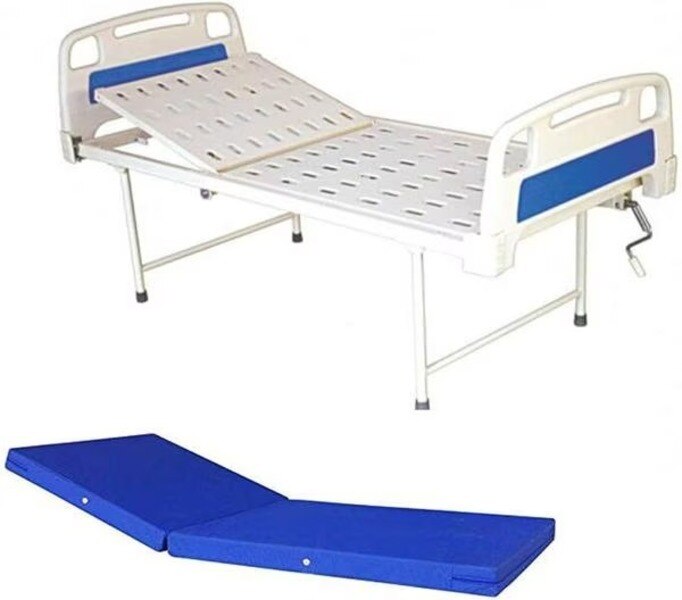
 | Rent Base Products V Karan Pharma, Kalwa Thane, is a trusted supplier of hospital beds with mattresses. View product → |
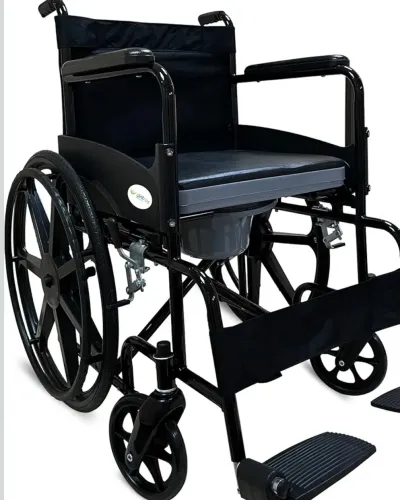
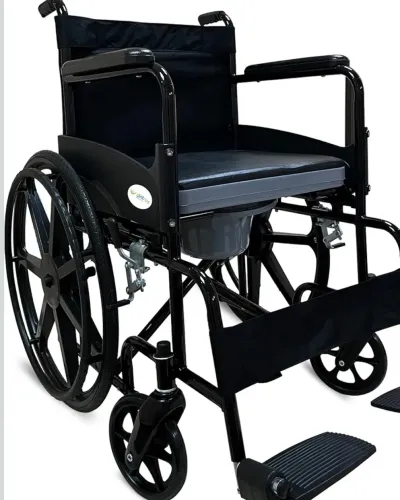
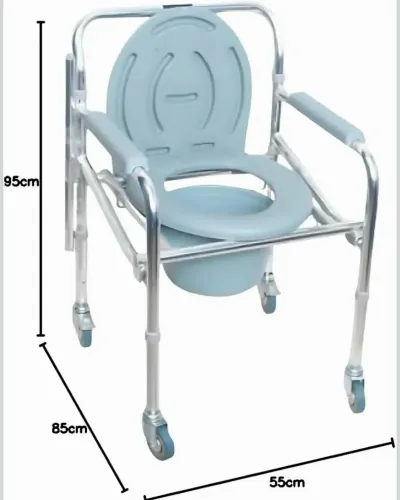
 | Rent Base Products V Karan Pharma, Kalwa Thane, is a dependable supplier of wheelchairs and commode chairs. View product → |
Frequently asked questions
When should you choose a hospital bed for home patient care?
Choose an adjustable hospital or home-care bed when the patient needs frequent repositioning, bedside washing, assisted transfers, or overnight observation. Use a standard bed with add-on supports when the patient transfers reliably and needs occasional help.
What should you measure before bringing a hospital bed home?
Measure the entrance, doorways, corridors, lift or staircase, turning areas, and the room where the bed will stand. Check the bed’s assembled width, length, height range, clearance, castors, brakes, and power requirements before delivery.
How do you match a mattress and side rails to a patient?
Match the mattress to the patient’s skin condition, mobility, weight, and repositioning needs. Select side rails after assessing fall risk, bed-exit ability, entrapment risk, and whether the patient can use the rail safely.
How do you choose between a bed pan and a urine pot?
Choose the aid the patient can reach, hold or position with assistance, and use without painful hip, knee, or back movement. Check the shape, handle, opening, stability, capacity, spill resistance, and cleaning method.
How should home-care equipment be arranged and cleaned?
Lock the bed castors, keep the call bell and toileting aid within reach, maintain a clear transfer route, and write down who handles transfers and cleaning. Empty and clean bed pans and urine pots promptly using the product’s care instructions.